What it costs to donate to build a mosque
GHH currently builds seven kinds of masjid, from a small musalla in a refugee camp to a combined school and masjid. Each has three ways to give: a contribution, half the build, or the whole build.
| Masjid |
Worshippers |
Contribution |
Half |
Full |
| Rohingya Masjid (musalla) |
up to 150 |
£743 |
£1,100 |
£2,200 |
| Uganda Rural Masjid |
100+ |
£1,700 |
£2,550 |
£5,100 |
| Uganda Community Masjid |
250+ |
£2,400 |
£3,650 |
£7,300 |
| Pakistan Rural Masjid |
150–200 |
£2,500 |
£3,800 |
£7,800 |
| Pakistan Community Masjid |
150–200 |
£2,500 |
£5,500 |
£11,400 |
| Pakistan School & Masjid |
150, plus 30 pupils |
£2,500 |
£8,150 |
£16,300 |
| Syrian Refugees Masjid |
250–300 |
£10,000 |
£15,000 |
£30,000 |
Smaller gifts of any size are also accepted. You can compare all of them on our building masjids page.
Step 1: the land
A masjid starts with a plot. The school and masjid shown in our Pakistan film was built on land given as waqf, an endowment set aside permanently for the sake of Allah, in Goth Nandhi Thari, Thari Mirwah, District Khairpur, Sindh.
Land shapes the building. On the Uganda rural masjid page, for example, the planned size is about 25 by 30 feet, but the final size depends on the land given for it.
Water and power matter at this stage too. The Pakistan school and masjid uses the local water connection or an existing borehole. Where there is neither, a borehole has to be funded separately or a different site chosen.
Step 2: the build, and what your money pays for
Each appeal page lists what the full price covers. Three examples show how much varies by project:
- Uganda Rural Masjid (£5,100): foundations, walls and roof as a permanent building in place of a shelter of grass or leaves; windows and doors; plastering and paint; carpets; a toilet.
- Pakistan Rural and Community Masjids (£7,800 and £11,400): the building, a fresh water supply and toilet block, Qurans, fans and lighting on solar power, and a large solar water well for the masjid and the community around it.
- Pakistan School & Masjid (£16,300): about 1,410 sq ft of brick and block, a prayer hall for 75 and an open prayer area for 75 more, two classrooms with desks, chairs and blackboards, a wudu area, four toilets, an overhead water tank, ten ceiling fans and full wiring, and a one-year warranty on the building and electrics.
Build times are listed on each page: 4–5 months for the Uganda rural masjid and the Syrian refugees masjid, and 6–8 months for the school and masjid. Work starts once the funds are in. Weather, transport and local conditions can move a date, which is why the pages give a range rather than a fixed day.
Step 3: opening, running and updates
When the build is finished, the masjid is handed to the people who will use it. In Pakistan, local imams operate it and the community manages it. In Uganda, a member of the local community is appointed to manage it, our team carries out regular checks, and general funds may be used for repairs.
If you fund a whole masjid, you get personalised video updates and a final report, and a permanent plaque with your chosen name or names goes near the main entrance. For the school and masjid, you also receive a banner and photos and film of the build and the handover.
If you give part of the cost, your gift is pooled with others. Once enough has been given to cover a full build, GHH builds the masjid under the name "Fael Khair", meaning "doer of good", in honour of everyone who contributed. A video of these masjids is shared on our social media and YouTube.
Why people choose to build a masjid
The Prophet ﷺ said: "Whoever builds a mosque for Allah, Allah will build for him a house in Paradise" (al-Bukhari and Muslim). A masjid is also Sadaqah Jariyah: every prayer, Qur'an class and gathering held there continues to benefit people long after the donation.
Our films show what that looks like on the ground, from Build a Masjid in Pakistan: From Empty Plot to First Prayer to Masjid Al-Noor Opens for Syrian Refugees: First Jumuah After Praying in a Tent. If you want to donate to build a mosque but cannot cover a full build alone, you can start a free fundraising page and invite family and friends to give with you.

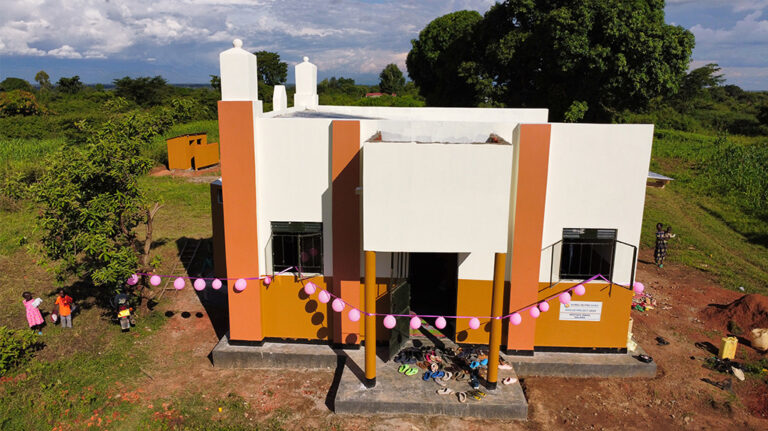 Uganda rural masjid
£5,100 replaces a grass shelter with a permanent masjid. Donate now
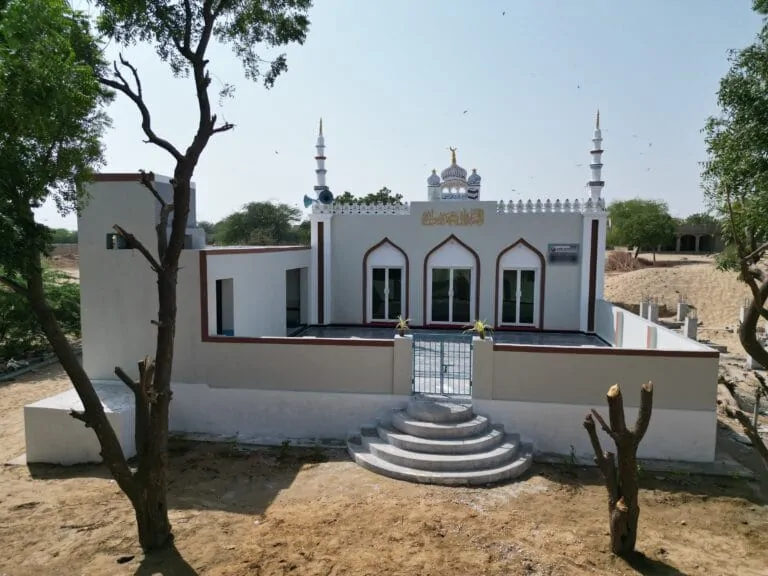 Pakistan community masjid
£11,400 including solar power and a solar water well. Donate now
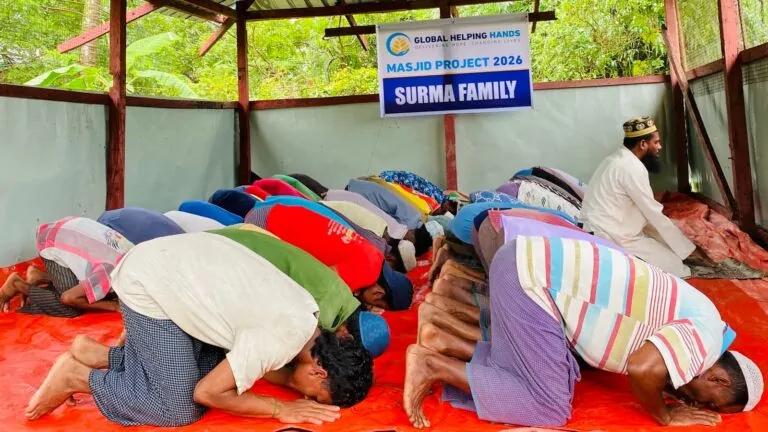 Rohingya camp musalla
£2,200 prayer room for up to 150 worshippers. Donate now
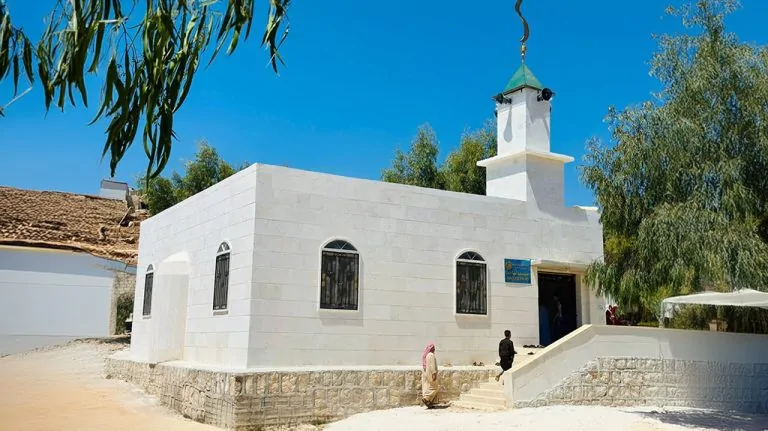 Syrian refugees masjid
Room for 250–300 worshippers; give £10,000, £15,000 or £30,000. Donate now